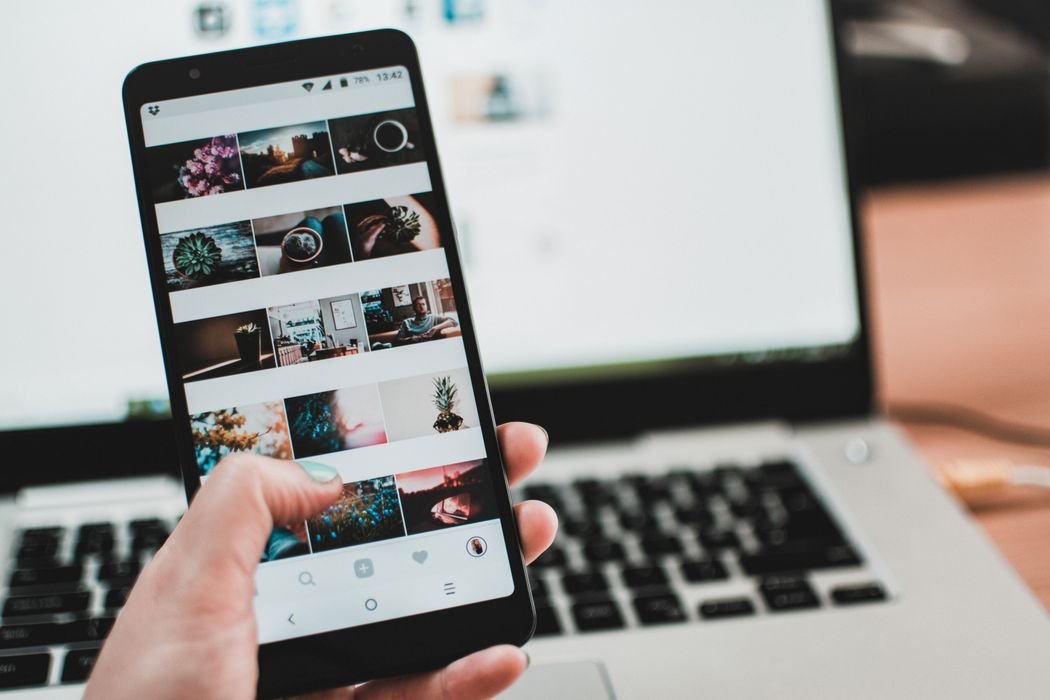
For a decade the honest answer to “does social media help SEO?” was an unsatisfying indirectly, and nobody can measure it. That answer is now out of date in one specific and useful way: Google Search Console can report on your social content directly.
Three things genuinely connect social media and search. One is new, two have been available for years and are still widely unused. It is worth being precise about all three, because the topic attracts more confident nonsense than almost any other in SEO.
1. You can connect social accounts to Search Console
In December 2025 Google introduced social channels in Search Console, and in July 2026 it rolled out platform properties globally alongside a dedicated social and video performance guide.
A platform property is a new property type representing your presence on a supported platform, rather than a website you own. Four are supported at launch:
| Platform | Supported |
|---|---|
| Yes | |
| TikTok | Yes |
| X | Yes |
| YouTube | Yes |
How to add one: open the property selector in Search Console, click Add property, choose the platform, and complete the on-screen verification to authorise the connection. Each account is added and verified individually, and no website is required — creators without a site can use this too. If you have already claimed your Search profile, the property may be added automatically.
What you get: an Insights report covering traffic trends over the last 28 days, your top-performing posts, the queries people used to find you, and where your audience is. Plus the full Performance report — clicks, impressions, CTR, average position, queries — filterable by device, country and page, exactly as you would for a website property.
That last part is the genuinely useful bit. You can now see the search queries that surface your Instagram or TikTok posts, which is data nobody outside Google had before.
A practical note from the documentation: on YouTube, filtering by playlist returns the playlist page itself rather than the videos in it, and comparing Shorts against long-form or Reels against feed posts requires filtering by URL pattern.
2. What this does not mean
Here is where the topic usually goes wrong, so it is worth stating plainly.
Platform properties are measurement, not a ranking mechanism. Google’s documentation treats them as reporting on how content is discovered — not as a signal that connecting an account improves anything. Adding your Instagram to Search Console will not raise your website’s rankings, and nothing in Google’s announcement suggests otherwise.
Social signals are still not a direct ranking factor. Likes, shares and follower counts do not feed the ranking algorithm. Links from social platforms are overwhelmingly nofollow and pass no authority in the traditional sense. Google has been consistent on this for years and nothing in the 2026 changes contradicts it.
What has changed is visibility and measurability. Social content appears in search results, and now you can see how it performs. Those are real and worth acting on. They are not the same as a ranking boost, and any agency selling you social posting as a ranking tactic is selling something else.
If you want the distinction in one line: social does not make your site rank better; social makes you findable in places your site is not.
3. Where social actually shows up in Google
Even before platform properties, social content occupied real search real estate:
- Brand queries. Search a company name and its social profiles typically occupy several of the first ten results. That is SERP territory you control the content of — and it is territory a competitor or a disgruntled review site would otherwise hold.
- Discussions and forums. Google surfaces community and social discussion for queries where opinion matters, which is a large share of purchase research.
- Video results. YouTube content ranks in Search proper, not only on YouTube.
- AI-generated answers. Answer engines lean heavily on discussion and social content when summarising opinion-shaped queries. If your brand is absent from those conversations, you are absent from the summary. Measuring that is a separate exercise — our AI overview visibility audit covers how often answer engines cite you and who gets cited instead.
4. The two connections most sites still skip
Platform properties are new. These two are not, and they are more directly useful for how Google understands your brand.
Organization schema with sameAs
The actual, long-standing mechanism for telling Google that a set of social profiles belongs to your organisation. Add an Organization block to your site with a sameAs array listing your profile URLs:
{
  "@context": "https://schema.org",
  "@type": "Organization",
  "name": "Your Company",
  "url": "https://example.com",
  "sameAs": [
    "https://www.linkedin.com/company/yourcompany",
    "https://www.instagram.com/yourcompany",
    "https://www.youtube.com/@yourcompany"
  ]
}
This is entity work rather than ranking work: it helps Google resolve your brand into a single known entity across the web, which supports Knowledge Panel eligibility and brand disambiguation. Our schema markup guide covers the syntax, and rich results covers which types earn visible SERP features. If you would rather have it deployed and validated across your templates, that is what schema implementation is for.
Google Business Profile social links
Google Business Profile supports one social link per platform — Facebook, Instagram, LinkedIn, Pinterest, TikTok, X and YouTube. Add them under Edit profile → Social profiles. Availability still varies by region.
For any business with a local presence this is a five-minute job that puts your social profiles directly into a surface Google already shows to people searching your name. See our Google Business Profile guide and local SEO guide for the rest of the profile.
5. The branding mechanism, stated honestly
“Social media builds your brand” is true and usually hand-waved. The specific mechanism that touches search is worth naming:
Social builds branded search demand. People who encounter you on social later search your name on Google. That produces branded queries, which produce clicks, which produce a durable traffic base that does not depend on ranking for competitive generic terms.
This matters most for weak domains. A new site cannot outrank established competitors for head terms for years — but it can own its own name immediately, and every branded search is a visit no competitor is bidding against.
It compounds in two further ways. Distribution earns links: a post that reaches the right audience gets picked up by someone with a website, and that link is a ranking signal even though the social share was not. And familiarity lifts click-through — a recognised name in the results gets clicked more often at the same position.
The caveat: branded search demand is slow, and it is easy to fool yourself. Track branded and non-branded queries separately in Search Console, or brand growth will quietly flatter your SEO reporting. Our SEO report template treats them as two of the four numbers precisely for this reason.
What to do this week
| Action | Effort | Why |
|---|---|---|
| Add your Instagram, TikTok, X and YouTube as platform properties | 20 min | Query-level data on social content you could not see before |
Add Organization schema with sameAs | 1 hr (dev) | Connects profiles to your brand entity |
| Add social links to Google Business Profile | 5 min | Free SERP real estate on brand searches |
| Split branded vs non-branded in your reporting | 30 min | Stops brand growth being misread as SEO growth |
| Check which of your brand-query results you control | 30 min | Search your own name; see who owns the first ten results |
None of these is a ranking tactic. All of them are cheap, and the first one gives you data that did not exist a year ago.
Where this fits with the rest of your social work
This article is about the intersection with search. For the social side proper — platform choice, content pillars, posting cadence — see our social media strategy guide, and for measurement beyond search, social media analytics covers the metrics that actually indicate business results rather than vanity.
If you want the two disciplines run together rather than as separate contracts, our social media marketing service and SEO services are scoped to overlap deliberately — the branded-search effect above is the reason they work better as one programme than two.
Sources: Google Search Central, Platform properties roll out globally, plus a new social and video performance guide (July 2026); Analyze social and video content in Search Console; Google Business Profile Help, Manage your social media links.